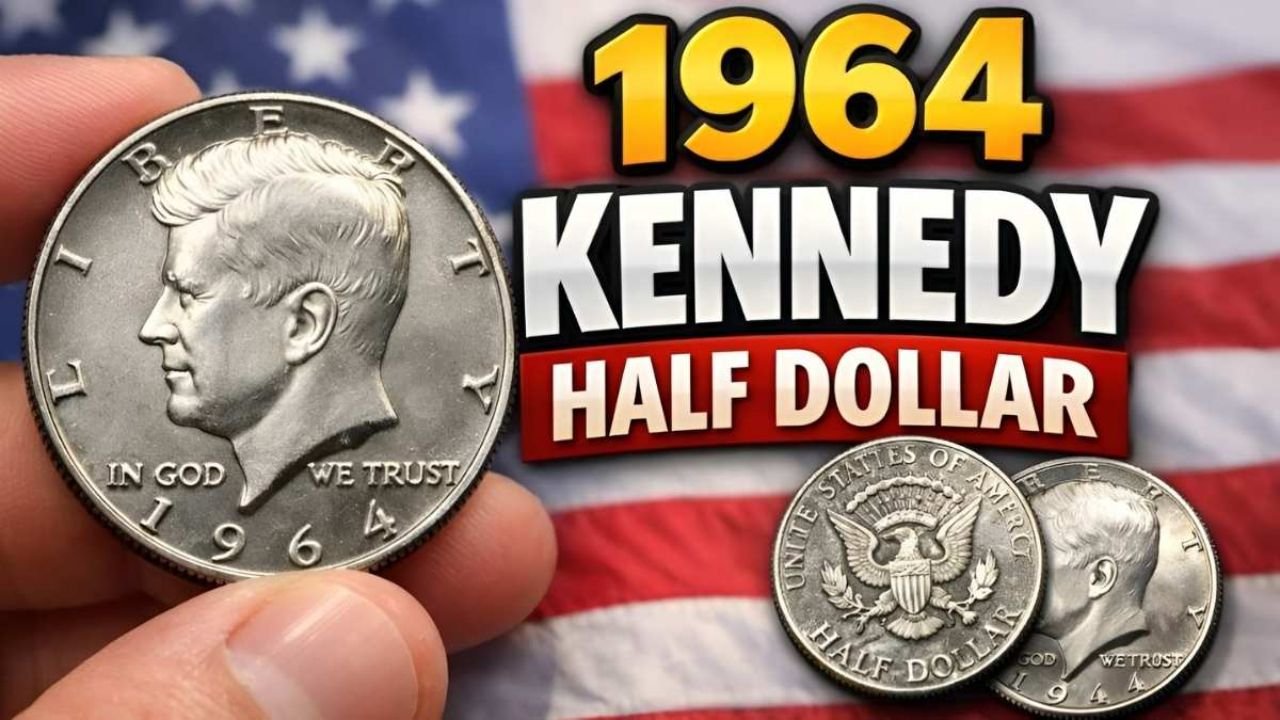
The 1964 Kennedy half dollar stands as one of the most iconic coins in American numismatics. Struck shortly after the assassination of President John F. Kennedy, this coin was introduced as a tribute to his legacy, quickly becoming a symbol of national remembrance. In 2026, collectors continue to value the Kennedy half dollar not only for its historical significance but also for its silver content, rarity, and unique varieties that make certain examples highly desirable.
Historical Background
The Kennedy half dollar was first minted in 1964, replacing the Franklin half dollar series. Its release captured the nation’s attention, with Americans eager to honor the fallen president. Composed of 90 percent silver and 10 percent copper, the 1964 Kennedy half dollar was one of the last circulating U.S. coins with such a high silver content. This intrinsic silver value continues to make it attractive to both collectors and investors.
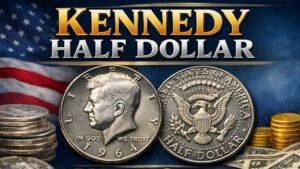
Beyond its composition, the coin symbolizes a pivotal moment in U.S. history. Its design features a profile of President Kennedy on the obverse, sculpted by Gilroy Roberts, while the reverse, created by Frank Gasparro, depicts the presidential seal—a design that reinforces its commemorative nature and enduring appeal.
Mint Marks and Varieties
The 1964 Kennedy half dollar was minted at two locations:
- Philadelphia (no mint mark): The majority of coins were struck here, making them the most common variety.
- Denver (D mint mark): Produced in smaller numbers, these coins are scarcer and often command higher premiums in uncirculated grades.
Certain rare varieties also exist, including doubled die obverses and striking errors. These anomalies can substantially increase a coin’s value, appealing to collectors seeking distinctive pieces beyond standard minting runs.
1964 Kennedy Half Dollar Value Chart (2026 Estimates)
| Condition | 1964 (P) | 1964‑D |
|---|---|---|
| Good (G‑4) | $12 | $12 |
| Fine (F‑12) | $13 | $14 |
| Very Fine (VF‑20) | $14 | $15 |
| Extremely Fine (EF‑40) | $15 | $16 |
| About Uncirculated (AU‑50) | $18 | $20 |
| Uncirculated (MS‑60 to MS‑63) | $25–$40 | $30–$50 |
| Proof (Philadelphia only) | $40–$100 depending on grade | N/A |

Rare varieties, such as doubled die coins or error strikes, can reach hundreds or even thousands of dollars, with particularly well-preserved examples sometimes achieving even higher valuations at auction.
Key Factors Affecting Value
Silver Content
Each 1964 Kennedy half dollar contains 0.3617 ounces of silver, giving it intrinsic value that fluctuates with global silver prices. This makes the coin both a collectible and a tangible investment.
Condition
Condition remains paramount. Coins graded at higher levels—especially proof coins or uncirculated examples—command significant premiums, as collectors prize their visual appeal and preservation.
Mint Mark Significance
Denver-minted coins are rarer than Philadelphia issues and are often more sought after in uncirculated condition, enhancing their market value.
Error Coins
Minting anomalies, including doubled dies or other striking irregularities, can drastically elevate a coin’s desirability. These errors are highly collectible and often become the centerpiece of specialized collections.
Collector Trends in 2026
In 2026, the Kennedy half dollar continues to serve as an accessible entry point for new collectors. Its combination of affordability, historical resonance, and silver content attracts both hobbyists and investors. At the same time, seasoned numismatists focus on acquiring rare varieties, high-grade examples, and error coins.
Online marketplaces and auction platforms have expanded access to high-value coins, allowing collectors worldwide to bid on rare Kennedy half dollars. Proof coins and unusual minting varieties are particularly sought after, reflecting the broader trend of collectors valuing both rarity and historical significance.
Investment Potential
While many 1964 Kennedy half dollars trade modestly above their silver content, certain rare or high-grade examples offer strong investment potential. Collectors and investors alike view these coins as tangible assets that combine historical significance with the security of physical ownership. Over time, properly preserved Kennedy half dollars—especially rare varieties—can appreciate in value, making them a prudent addition to both numismatic collections and diversified investment portfolios.
Conclusion
The 1964 Kennedy half dollar is far more than a coin. It is a piece of American history, a tribute to a beloved president, and a collectible that continues to capture the imagination of collectors in 2026. Its silver content, historical context, and rare varieties make it both a tangible investment and a treasured artifact. Whether acquired for its intrinsic value, its commemorative significance, or its scarcity, the Kennedy half dollar remains a cornerstone of U.S. numismatics, offering both aesthetic enjoyment and financial potential for collectors worldwide.